OUGD504 - Design for Print and Web: Typography Research

As I want to incorporate a drop cap into the branding of my restaurant I want to create my own that would fit the tone of voice. I decided to look at how others are used for research. The tone of voice for my own branding I want to be quite academic and classy, as well as professional and clean.

This is a word within a contained area, and I like the idea of having a letter contained because then it has clear boundaries and I think these are associated a lot with old books and literature. I think that is is black and white and looks quite textured also adds to the old feel.


I love this letter, because although there isn't a border around it like the last one, it is still contained with the use of shape making an imaginary boundary. Although there is no design within the letter, the curves and shape used makes it very extravagant and elegant.


This is one of the alphabets Jessica Hische designed for the Daily Drop Cap and I love all of them. Even though they are all very different, they seem to be part of the same alphabet due to the use of colour and format. Some of them are quite contemporary (like the K and the Q) but still look quite traditional, perhaps through the use of shape and colour. My favourite letter here is the B, which I think is quite simple with the shape and the illustration within the letter, but combined it looks really elegant and decorative. 


Some more of Jessica Hische's work, she designed these bookcovers where it is a standalone letter. I want to create the G which will stand alone on most of the branding, so I want to make sure it works on its own.


These letters are quite simple as they just use block shapes and lines or circles as a pattern but they look effective because of how they are used. I think the use of shape is good on the A because it uses the pattern to make the crossbar of the A, and makes the hairline look really thin by using the lines on the right side making it interesting to look at.


Similar to the last set of letters, I think these are more grown up, probably due to the colours used and they use more shapes as patterns. I really like the L here, because with the drop shadow it looks 3D and the pattern inside the letter gives the viewer something to look at.


This is from the Daily Drop Cap project, and I like how it is contained in a square. To me it looks quite christmassy because of the shapes used and reminds me of a snowflake or decoration.


This is a highly decorative letter, and I think it is amazing. I like the really close together lines within the letter and this is something I've noticed a lot of letters have. I think the decorative swirls around the letter make it very ornamental and pretty. This isn't something I would do for this project, 1. because I don't have the time or skill and 2. it has to work alongside normal letters and I think it would be too extravagant to fit in with them.


There is a selection of decorative letters here, and I think they are amazing and they definitely capture the viewer into looking at them. My favourite letter is the I on the second line because it uses a pattern to make the shape of the letter rather than have a solid outline and you can easily see what it is still.


This is the kind of style I have in mine for my own, as it still keeps the original shape of the letter, but is made for visually interesting through a drop shadow and decorative lines. I think this would work well with my own branding because it needs to work with the rest of the word and that font, as well as work well on its own. This kind of style is very versatile.


E
I love how this letter is made up of different components to make one letter and I think it would make a really nice drop cap in a classic or fantasy book. I think this kind of thing would work for my own branding, because although it is very decorative, I could keep the width of the original letter and the serifs so it would work with the rest of the word.


This is a dropcap shown in context, and I have an idea for a pattern for the branding which is to incorporate the dropcap I make into a real book page. I need a pattern because I need something to stick on the back of the menus and for the placemats, and I thought by putting my dropcap into context, it will fit in well with the concept and theme of the brand. 


Here are some ornate letters and I think they are very sophisticated and elegant. But I think something like this would make my branding seem too old-fashioned - I still want it to appeal to a contemporary audience.


I think this monogram is a more contemporary style as it is very vector based and the decoration is just lines rather than ornate deocration.


This is one of Jessica Hische's daily drop caps, and I like how the thick outline exaggerates the original shape to make it more ornamental.


This full alphabet is very illustrative and there is plenty for the viewer to look at, but I think it is more of a poster and something for peoples' entertainment than something I would do myself for a restaurant branding. I love how detailed and illustrative it is though.


This is similar to what I had in mind - the original letter easy to see, with decoration around it, but in a more contained way. But having looked at more letters now I think I will do something that is less decorative to fit in with a more contemporary style. 


These are incredibly old-fashioned and highly ornate letters which I would expect to see in really old books and although I love this style, I think it is something I will stay away from in mine because I want to create something which is more up to date.


These are some more of Jessica Hische's daily drop caps, and I chose to look at them because I love the style. I love the use of lines to make patterns in the letters, outside the letters and to make up the actual letter.


I love how these letters are used in packaging, and the thickness of the letters allows the illustrations to stand out and be incorporated as part of the letter, rather than around the letter. This also allows the original shape of the letter to be seen, which I need for my own. They are for Waitrose, which is quite a upmarket supermarket, and I want my own branding to be quite upmarket.


After looking at lots of different letters and styles, I think I want to produce something that has some sort of illustrative style and difference to it, but isn't extremely decorative because I want my cafe to be clean and target academics too.

OUGD504 - Design for Print and Web: Initial Research

I decided to do some initial research based on my idea of having a restaurant in a train station or airport, or even rebranding plane food. I looked at different cafes and restaurants in airports to see how the space is used and what materials are used.


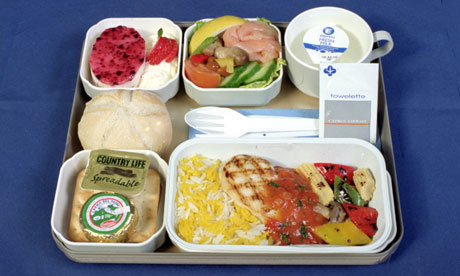
I also looked at plane food, because I would need to create some packaging.


I looked at cafes in train stations to see how these are branded and how they are advertised. Pumpkin Cafe is one that I see a lot, and so I looked at that. 


I also looked at pictures of people eating on trains, as the idea for mine is that people would eat here rather than on the station.


This is food you can get on France to Spain trains, showing that train food does get packaged similar to plane food on long haul journey's, which is what I would look at.


I looked at some typography terminology to see if it would help me think of any names that could incorporate type as well as travel and food.


I also looked at types of restaurants, as this would help me establish what mine would be called and the options there are.


At this point I then looked at more ideas, and came up with my final concept to do a cafe for people who want to do work and read, so I'm going to look at research for that now.

OUGD501 - Lecture Notes: Censorship and Truth

Robert Capa was an Eastern European photographer who used a psyeudym as a name and staged the famous war photograph, Death of A Loyalist Soldier.


Peter Turnley photographed the Gulf War and wasn't allowed to publish pictures that he thought the public needed to see so they could see the whole picture of war for when there is another one.


OUGD501 - Lecture Notes: Globalisation, Sustainability and the Media

We're in a process of globalisation which is expanding, it is occuring and is a world with a series of radical different cultures which is now turning into a unified, mono culture.
It can be seen as positive and negative from different perspectives.

Socialist
Process of transformation of local and regional phenomena into global ones. It sees globalisation as a positive thing for the greater good.

Capitalist
The elimination of state-enforced restrictions on exchanges across borders and the increasingly integrated and complex global system of production and exchange that has emerged as a result.
It keeps needing to make profit, and if you keep a capitalist system to one country it will eventually run out of a market, so it needs to expand to other countries and cultures. Globalisation is something capitalist countries encourage as it spreads the markets globally.

McDonaldisation
A sociologist called George Ritzer talks about McDonaldization.
Refers to the idea that American big companies are now present globally and taking over markets globally. Also refers to process of an idea of an American organising of the world that's been transposed into different cultures. For eg, eating quickly 'fast food', without family meal time and no regard for health.

Marshall McLuhan
With TV and radio being invented in 20th century, people got excited about globalisation as they wanted this unified, global community.
Marshall McLuhan thought that telecommunications will affect how we interact with each other and it will have a huge impact on our lives. Says it heightens our senses, like when listening to radio, we are listening to something very far away.

Global Village Thesis
Says the world has had an implosion, where the world has gotten smaller now as we can reach far out cultures and know more about their news, culture etc. It is a global village, and we are all aware of each others problems.

He wanted a global embrace, but this is not what has happened. Seeing images of war etc has desensitised our feelings towards other cultures.
Cultures are realising that their values are being overlooked and ignored

Problems of Globalisation
Sovereignty - challenges to the idea of the nation-state
Accountability - transnational forces and organisations - who controls them?
Identity - who are we? Nation, group, community

When there is a business in a country, laws can be passed to control them. However, when a business is in several countries, there can't be laws because we can't control them in different countries. This means that big businesses are actually more powerful than the government. 

Cultural Imperialism
IF the global village is run with  certain set of values then it would not be so much an integrated community as an assimilated one.

Rigging the Free Market
It's a myth that everyone has the same access to the same information
The media, like other multinational capitalist companies, operates as giant clusters of businesses controlled by one central business. 
American companies across the World, like Time Warner and HBO own a lot of companies that operate through the primary one. These companies control a vast amount of the World's media, and you can say that no matter where in the World you are, you are getting an Americanised stance on the World. 

Most important:
1. North America
2. Western Europe, Japan and Australia
3. Developing economics and regional producers (China, India, Brazil, Eastern Europe)
4. The rest of the world (Africa)

These companies are interested in the most important countries, and therefore put North American concerns firstly, for example if there was a magazine it would have American articles and ads, even if it was distributed in Africa.

It's a new form of imperialism  it's not about War, its about indoctrinating people to thinking its the most important way of life.

The biggest selling products in India now is skin whitening cream! As they have been so indoctrinated that the American life is so sought after, and this is what they aim to be now, devaluing their own culture.

The News media is a key part to propaganda. 
Chomsky & Herman (1998) Propaganda model

Ownership
A large proportion of newspapers are owned by Rupert Murdoch and he is a political take on the world. His agenda is to make as much money for himself as possible. He once boasted that it was the Sun that determined the outcome of the UK elections. There used to be a consertative supporting newspaper, but Labour made a deal with Murdoch that if he supported them, and relaxed laws about media. 
  • News of the World
  • The Sun
  • The Sunday Times
  • The Times
  • NY Post
  • BSkyB
  • Fox TV
Sourcing
If I was a journalist and went to the Obama press conference, and started saying 'I think you're responsible for the mass murderer of lots of families in Afghanistan', I would be arrested by the CIA and never allowed to interview him ever again. So the stuff that is reported, is the only things that are allowed to be reported, as the editor also has political allegiances and wouldn't let it go to print.

Flak
This manipulates the news even further, where money is put into lobby groups where they make laws in their interests. They use the media, put stuff into the media that spreads their take on the world. Ford, Texaco and Exxon set up a group called the Global Climate Coalition that perpetuates stories that paint the oil companies in a great light.

An Inconvenient Truth (2006)
  • Release less C02
  • Plant more vegetation
  • Try to be C02 neutral
  • Recycle
  • Buy a hybrid vehicle
  • Encourage everyone you know to watch this film
Solution to be more eco-friendly is to feed capitalist businesses - if you have a car, buy a hybrid car, if you have a lightbulb, buy a energy saving lightbulb. Make more money for capitalists

Jim Inhofe 'Global warming is one of the biggest hoaxes every perpetuated ever in American history'

Sustainability
A concept introduced in the 80s, with a view towards effectively stopping headlong race to the depletion of the worlds resources and destruction of our fossil fuels. 

Erin Balser, 'Capital Accumulation, Sustainability and Hamilton, Ontario: How Technology and Capitalism can Misappropriate the idea of Sustainability'

A plant that makes renewable energy. 
Only people that can buy it is richer, middle-class people, and not as much profit because it's expensive to make.
Pollutants from the plant polluted nearby rivers and noise pollution.

Greenwashing
Greenwash packaging - makes packaging look more eco friendly by adding recycling symbols, green colour scheme and unbleached paper. 

'Most things are not designed for the needs of the people but for the needs of the manufactors to sell to people' Papanek, V.


Copyright 2010. All rights reserved.

RSS Feed. This blog is proudly powered by Blogger and uses Modern Clix, a theme by Rodrigo Galindez. Modern Clix blogger template by Introblogger.