As I have now finished coming up with the recipes, which are on my my design practise blog, here are the sources of how I thought of them:
Butternut Squash and Swede Soup
I thought of combining squash and swede together, then I combined the recipe I found in the Kitchen Front Recipe book for the watercress soup and a roasted butternut squash and swede soup recipe I found here.
Pumpkin Soup
I decided to do a pumpkin soup because it is a hearty meal, and it is in season at the end of the year. I combined the method from the watercress soup recipe in the Kitchen Front Recipe book, and two pumpkin soup recipes I found on the internet which can be found here and here. The first link is a wartime pumpkin soup recipe which I thought was appropriate.
Rabbit Stew
I decided to do rabbit stew because my Grandma used to eat it during the second world war, it was in the Kitchen Front Recipe book and it was also featured in an episode of the Hairy Bikers Best of British, where I found the recipe to online and referenced from that, which can be found here.
Vegetable Stew
My granddad and grandma said they used to eat this with whatever leftover vegetables that their mothers had, and I make it myself and know that it is a simple recipe to make. I combined my own knowledge of how to make stew and parts of the Vegetable Hot-Pot recipe which was in the Kitchen Home Front recipe book.
Fishcakes
This was my own recipe and I decided to use it because it is very simple to make, doesn't use a lot of ingredients and fish wouldn't have had to been imported during the war because Britain is surrounded by water.
Fish Pudding
This was a recipe featured in the Kitchen Front Recipe book, but I didn't write down any notes about it, so I found a recipe on the internet which can be found here.
Shepherd's Pie
This was a simpled down version of my own recipe of Shepherd's Pie. I decided to use this because the vegetables can be grown in a garden, and mince meat is one of the cheapest bits of meat you can buy.
Beef Pot-Roast
This was one of the recipes from the Kitchen Front Recipe book and I used that for help on how to write the method as well as a recipe that I found online here.
British Fruit Pie
I decided to call this British Fruit Pie as I would be including fruits which could be grown here in the recipe, as they wouldn't have been able to import them during the war. There was a stewed fruit pie in the Kitchen Front Recipe book which is why I decided to use it. I looked at a few recipes online, but looked at this one in particular.
Rice Pudding
This is something my Grandma used to eat as a child during the war, and was mentioned in the recipe book I looked at, so I decided to include this. I looked at an old-fashioned rice pudding online here.
Context of Practice
Danielle Harrison
Showing posts with label OUGD405. Show all posts
Showing posts with label OUGD405. Show all posts
OUDG405 - Research, Collect, Communicate: PRODUCT
As I have decided to create a publication that will be a cookbook using the food available from rations and allotments during the war, I have decided to research this further.
WW1 Rations
Rations were only introduced during the first world war towards the end, in February 1918, to make sure that there were never food shortages. However, in 1916 families only had six weeks worth of bread left, which was a major part of their diet. Britain still imported their food from overseas, but in 1917 the Germans started sinking British merchant ships meaning there were was food shortages. Families were encouraged to turn their backgardens into allotments, and keep chickens. In 1917, the government attained 2.5 million acres of land for farming. This was done by the Women's Land Army as all the young men were at war. However, in 1918 the German U-boat campaign caused a lot of damage, and, rations were introduced. Products such as cheese, sugar and meat were rationed. As they were only introduced towards the end of the war, I am going to look at rationing in WW2.
WW2 Rations
During the second world war, rations were introduced at the beginning of the war in 1940. Each person in Britain was given a ration books, and there were three different types:

Rationing didn't end until 1954, even though the war ended in 1945. This suggests there would have been a need for women to have recipes which could be made out of what they had, because they wouldn't be used to such a restriction.

It wasn't just food that was rationed either, clothing and furniture was as well.
These are the weekly rations for 1 adult:


The recipes that I will include in the recipe book will have a lot more vegetables in them, as people grew them in their garden.
What was grown in the allotments
I thought it would be a good idea to research what herbs you can grow in a garden, because a lot of the recipes would lack flavour. I looked at a website which says the types of herbs you can grow at home and they included herbs such as basil, parsley, dill, bay leaves, sage and mint can be grown.
I also looked at a video on how to grow herbs.
In the feedback I received in this morning's crit, Ant said to look at posters which encouraged growing own vegetables and I found a campaign which was very morale boosting, Dig For Victory:


I then watched a video on the Victory Gardens, which people had in their back gardens. The sound was really bad quality, but I managed to hear the types of vegetables which people grew: potatoes, squash, leek, cabbage, carrots, turnips, spinach and cauliflower.
Women tended to the gardens of their factory grounds during their lunchtime, children worked on the land in their school time. This video tells where you can grow vegetables, who helps, how long it takes and tips on how to dig. It says you can grow potatoes, cabbages, leeks, tomatoes and peas. It is promoting and glorifying gardening and the crops it produces.
War Recipes
I looked on Amazon at reviews for a cookbook of World War 2 recipes, so that I could see what target audience it would be aimed at. They are both women who are old enough to be in or remember the war, and thoroughly enjoyed the book.
Therefore I will be aiming it at older women whose parents were in the war, or who were children during it, and are interested in reading about what foods their parents cooked, or what they ate themselves, and perhaps want to try them out now, or just simple read it for the nostalgia.

I went into the Brotherton Library at the University of Leeds, to look at some war-time recipe books. They have an extensive collection of old books, and I found one called Kitchen Front Recipes by Ambrose Heath.
I wrote down notes from the book and recipes that were included in it:
Pot-Roasting
Meat is cooked alone although vegetables are often added towards the end of the cooking. Solid or rolled piece of beef weighing about four pounds, say topside, chuck or clod. Salt and pepper are added. Melt a tbsp of beef fat until hot, in an iron stewpan, and when this is hot brown the meat all over in it. Now add a teacupful of hot water, cover the pan tightly, and cook over a low heat for about three hours. As for the vegetables, you can add carrots, celery, turnips and so on, whole or quartered or diced, and they can be cooked on the pan while the joint is finishing.
Watercress Soup
Wash a bunch well, put cress in a saucepan with a piece or margerine until the leaves go soft. Add 3/4 of a pint of boiling water and two large potatoes, peeled and sliced, put lid on and boil for half an hour. Rub the whole through in a sieve, put the puree on the fire and add a cupful of boiling milk. Bring it to the boil, season and serve.
Herbs and Spices
Basil is good with tomatoes
Bay leaves, of course, for flavouring soups, sauces and stews
Rosemary in a stew with hare or veal
Tarragon and sage in chicken and rabbit
Beetroot Soup
2 Beetroots, small head of celery, 1 1/2 pt water or veg stock.
Bake the beetroots, peel and chop them up with the head of celery. Cook these with water, adding 1 tbsp of vinegar. Cook until soft enough to pass through a sieve. Thicken with a little flour, season and serve.
Minestrone Soup
Potatoes, onion, carrots, brussel sprouts and parsley. Add stock or water and bring to boil, add salt and vegetables. Fifteen minute before serving, add broken up spaghetti and leave to cook until nice and thick.
Baked Stuffed Apples
Bake apples, any jam to stuff them, could add raisins, figs and dates, and ginger or cinnamon to add flavour to them. Blackberry jam or jelly, and honey and nuts also work well.
Chocolate Rice Pudding
Add to the milk as much melted chocolate or sweetened cocoa powder and then bake the pudding in the usual way.
Vegetable Hot-Pot
Wash and slice 1 1/2lb potatoes, add 1/21b runner beans, 1/1lb carrots and a bunch of spring onions sliced. Put all in a casserole, fill with water half way past the vegetables. Add salt and pepper, put a bunch of fresh herbs in and cover closely and simmer for an hour.
Stewed Fruit Pie
Add bicarbonate soda and 2oz of sugar to fruit. Stew fruit with half a level of bicarbonate soda teaspoon for each pound for fruit.
Interview
I then spoke to my Grandma about the food she used to eat when she was younger during the war.
Hairy Bikers Recipe
Cookbooks
I am now looking at modern day cookbooks that I own, to see the types of recipes, the way it is laid out and sectioned, and the overall look and feel of them.


Appliances
In the 1940s, there were different appliances then instead of the modern ones we have today. To keep with the feeling of the wartime recipes I will focus on the traditional methods in my cookbook. I found what families had in their kitchens during this time.
I have highlighted the appliances that were used, and will bear these in mind when writing the methods for the recipes.
Food Imagery From 1940s


These images from Retro Press mix photography wit type and illustration. I won't be using photography because I don't have the time or resources to photograph the recipes. But I will be using typography and illustration. The images seem to be very warm, so I could add a warming filter to the illustrations or drawings that I do on Illustrator.
Illustrations from 1940s
I also found some images from a vintage blog of advertisements which were popular in the 1940s.


Lucinda Rogers
In my feedback, Danielle suggested to look at Lucinda Rogers work, and a couple more people agreed this would be a good style to include in my work. I looked through some of her work, and I really like the mix of fine liner and watercolor, and this is a possibility to incorporate in my own work.


Food Illustrations
I then looked at vintage illustrations of food so that I could see different styles of how it is drawn:


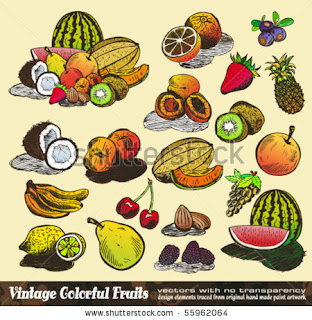
Then I looked at a blog called Daily Daydreams, and found some really good illustrations of food:


I then clicked on a link from here, and went to theydrawandcook, and found some more illustrations for recipes
.jpg)

.jpg)
.jpg)

.jpg)


WW1 Rations
Rations were only introduced during the first world war towards the end, in February 1918, to make sure that there were never food shortages. However, in 1916 families only had six weeks worth of bread left, which was a major part of their diet. Britain still imported their food from overseas, but in 1917 the Germans started sinking British merchant ships meaning there were was food shortages. Families were encouraged to turn their backgardens into allotments, and keep chickens. In 1917, the government attained 2.5 million acres of land for farming. This was done by the Women's Land Army as all the young men were at war. However, in 1918 the German U-boat campaign caused a lot of damage, and, rations were introduced. Products such as cheese, sugar and meat were rationed. As they were only introduced towards the end of the war, I am going to look at rationing in WW2.
WW2 Rations
During the second world war, rations were introduced at the beginning of the war in 1940. Each person in Britain was given a ration books, and there were three different types:

Rationing didn't end until 1954, even though the war ended in 1945. This suggests there would have been a need for women to have recipes which could be made out of what they had, because they wouldn't be used to such a restriction.

It wasn't just food that was rationed either, clothing and furniture was as well.
These are the weekly rations for 1 adult:


The recipes that I will include in the recipe book will have a lot more vegetables in them, as people grew them in their garden.
What was grown in the allotments
I thought it would be a good idea to research what herbs you can grow in a garden, because a lot of the recipes would lack flavour. I looked at a website which says the types of herbs you can grow at home and they included herbs such as basil, parsley, dill, bay leaves, sage and mint can be grown.
I also looked at a video on how to grow herbs.
In the feedback I received in this morning's crit, Ant said to look at posters which encouraged growing own vegetables and I found a campaign which was very morale boosting, Dig For Victory:


I then watched a video on the Victory Gardens, which people had in their back gardens. The sound was really bad quality, but I managed to hear the types of vegetables which people grew: potatoes, squash, leek, cabbage, carrots, turnips, spinach and cauliflower.
Women tended to the gardens of their factory grounds during their lunchtime, children worked on the land in their school time. This video tells where you can grow vegetables, who helps, how long it takes and tips on how to dig. It says you can grow potatoes, cabbages, leeks, tomatoes and peas. It is promoting and glorifying gardening and the crops it produces.
War Recipes
I looked on Amazon at reviews for a cookbook of World War 2 recipes, so that I could see what target audience it would be aimed at. They are both women who are old enough to be in or remember the war, and thoroughly enjoyed the book.
Therefore I will be aiming it at older women whose parents were in the war, or who were children during it, and are interested in reading about what foods their parents cooked, or what they ate themselves, and perhaps want to try them out now, or just simple read it for the nostalgia.

I wrote down notes from the book and recipes that were included in it:
Pot-Roasting
Meat is cooked alone although vegetables are often added towards the end of the cooking. Solid or rolled piece of beef weighing about four pounds, say topside, chuck or clod. Salt and pepper are added. Melt a tbsp of beef fat until hot, in an iron stewpan, and when this is hot brown the meat all over in it. Now add a teacupful of hot water, cover the pan tightly, and cook over a low heat for about three hours. As for the vegetables, you can add carrots, celery, turnips and so on, whole or quartered or diced, and they can be cooked on the pan while the joint is finishing.
Watercress Soup
Wash a bunch well, put cress in a saucepan with a piece or margerine until the leaves go soft. Add 3/4 of a pint of boiling water and two large potatoes, peeled and sliced, put lid on and boil for half an hour. Rub the whole through in a sieve, put the puree on the fire and add a cupful of boiling milk. Bring it to the boil, season and serve.
Herbs and Spices
Basil is good with tomatoes
Bay leaves, of course, for flavouring soups, sauces and stews
Rosemary in a stew with hare or veal
Tarragon and sage in chicken and rabbit
Beetroot Soup
2 Beetroots, small head of celery, 1 1/2 pt water or veg stock.
Bake the beetroots, peel and chop them up with the head of celery. Cook these with water, adding 1 tbsp of vinegar. Cook until soft enough to pass through a sieve. Thicken with a little flour, season and serve.
Minestrone Soup
Potatoes, onion, carrots, brussel sprouts and parsley. Add stock or water and bring to boil, add salt and vegetables. Fifteen minute before serving, add broken up spaghetti and leave to cook until nice and thick.
Baked Stuffed Apples
Bake apples, any jam to stuff them, could add raisins, figs and dates, and ginger or cinnamon to add flavour to them. Blackberry jam or jelly, and honey and nuts also work well.
Chocolate Rice Pudding
Add to the milk as much melted chocolate or sweetened cocoa powder and then bake the pudding in the usual way.
Vegetable Hot-Pot
Wash and slice 1 1/2lb potatoes, add 1/21b runner beans, 1/1lb carrots and a bunch of spring onions sliced. Put all in a casserole, fill with water half way past the vegetables. Add salt and pepper, put a bunch of fresh herbs in and cover closely and simmer for an hour.
Stewed Fruit Pie
Add bicarbonate soda and 2oz of sugar to fruit. Stew fruit with half a level of bicarbonate soda teaspoon for each pound for fruit.
Interview
I then spoke to my Grandma about the food she used to eat when she was younger during the war.
"We used to have suet pudding and rabbit stew.
We used to have thick white lard used to put on bread.
We used to have broths.
And my mum used to have a great big jar of molt, and we used
to have a spoon of that a day.
Stews were made up of anything left over.
We used to toast our bread and roast potatoes on the fire
My mum used to make rice puddings and we all used to fight
over the brown skin over the top."
I am now looking at modern day cookbooks that I own, to see the types of recipes, the way it is laid out and sectioned, and the overall look and feel of them.
Jamie Oliver: The Naked Chef


The Student Cookbook


Three & Four Ingredients: 500 Recipes


The Children's Book of Baking


Slow Cooker Recipes


Cooking For Beginners


Appliances
In the 1940s, there were different appliances then instead of the modern ones we have today. To keep with the feeling of the wartime recipes I will focus on the traditional methods in my cookbook. I found what families had in their kitchens during this time.
Stoves
Stoves and ovens of the 1940s range from 30 inches to 40 inches wide, depending upon the space available in the kitchen, and were available in both gas and electric versions. Narrower models were used in apartment kitchens, while a larger and more luxurious home kitchen might have a wider and more feature rich stove and oven. Simple models included four burners, one oven, and a grill. Deluxe stoves had between four and six burners and may have had a built-in griddle. Two ovens and grills allowed multiple dishes to cook at different temperatures. Storage drawers and folding utility shelves were common.
Refrigerators
The refrigerators of the 1940s were available with freezers on the top or bottom. Larger refrigerators had a two-door configuration, while smaller ones had a single door with a freezer compartment. Most refrigerators, like the stoves and dishwashers of the 1940s, were white. Shelves, drawers and even rotating lazy Susans made the space usable and kept the '40s refrigerator well organised.
Small Appliances
One small appliance appears in nearly every kitchen advertisement from the 1940s. The stand mixer replaced the old fashioned wooden spoon or manual egg beater and made baking tasks, ranging from homemade cookies to fresh baked bread faster, easier and neater. Many '40s kitchens incorporated baking centres with space for a stand mixer, storage for baking pans and even bins for flour, sugar and other ingredients.
I have highlighted the appliances that were used, and will bear these in mind when writing the methods for the recipes.
Food Imagery From 1940s


These images from Retro Press mix photography wit type and illustration. I won't be using photography because I don't have the time or resources to photograph the recipes. But I will be using typography and illustration. The images seem to be very warm, so I could add a warming filter to the illustrations or drawings that I do on Illustrator.
Illustrations from 1940s
I also found some images from a vintage blog of advertisements which were popular in the 1940s.


Lucinda Rogers
In my feedback, Danielle suggested to look at Lucinda Rogers work, and a couple more people agreed this would be a good style to include in my work. I looked through some of her work, and I really like the mix of fine liner and watercolor, and this is a possibility to incorporate in my own work.


Food Illustrations
I then looked at vintage illustrations of food so that I could see different styles of how it is drawn:


Then I looked at a blog called Daily Daydreams, and found some really good illustrations of food:


I then clicked on a link from here, and went to theydrawandcook, and found some more illustrations for recipes
.jpg)

.jpg)
.jpg)

.jpg)


OUGD405 - WW1 Research
World War 1
Facts and Figures
It began July 28 1914, and lasted until November 11 1918.
There were over 37 million casualties in World War 1, with more than 16 million people dead. A third of the deaths were due to disease, like the Spanish Flu. - Wikipedia


These are from WW1 facts.
WW1 in Leeds
Project Inspire


Famous People from WW1
Famous People of WW1

Film
A Little Princess
Saving Private Ryan
All Quiet on the Western Front
War Horse
War Horse is a film set in 2011, about a young boy Albert, who raises a horse which gets sent out to war in Germany. He joins the war so that he can find the horse, and the films shows the journey in which the horse embarks on.
10 million horses died during World War 1. Before it was a film, it was a children's book written by Michael Morpugo in 1982, and it was then turned into a screenplay using a puppet horse.

I watched it to gain some knowledge about the war, how it is depicted in media, and to observe anything that I could research from this. Here are some notes and screenshots I took from the film:
The opening scene shows the English countryside, before industrialization as it is set just before WW1. Stereotypical landscape.


His wife is livid that he spent so much money on the horse, because they need to pay rent. Albert offers to train the horse, and here he is feeding him. He says 'bet you're missing your mum. First time away from home', which relates to the young men who will go away to war.


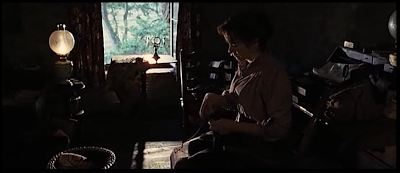


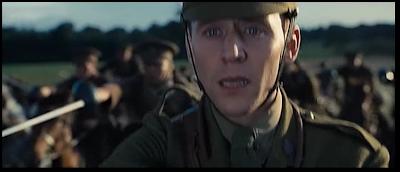


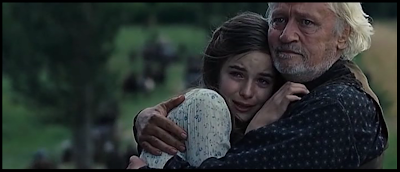


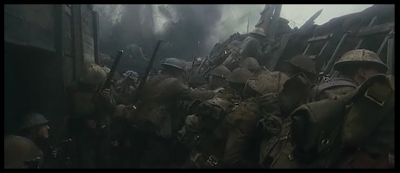


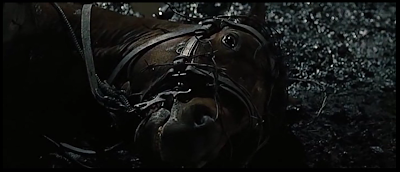


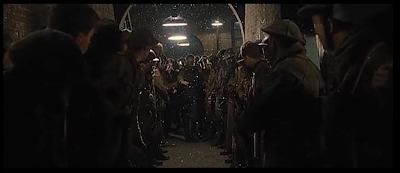


From this film, I want to look further at the value of guineas, horses in the war, other films based on true events, women's roles and war medals.
War Horse: The Real Story
I watched the documentary War Horse: The Real Story, on 40D. These are the notes I took from it, and some stills.
When the war started in 1914, Britain was still a country which relied on horse power.
In 1914 the British didn't have enough horses to take on the Germans.
They only had 26,000 horses, they needed an extra 100,000.
They set up a census, so that the army knew where
all the horses were in the country.

Len Whitehead
They interviewed someone who had his horses taken from him for the army and he said:
'One thing that affected me was when they took the horses. We only had four'.
'I was sad all day at school, and I cried myself to sleep that night'.
'Boxer, Duke and Violet were there names. I never saw them again of course'.
Warrior became a well known war horse, rode by 'Galloper Jack' (Jack Seeley). He volunteered after been in the Boer war.
After the Calvary charge on august 24, two British battalions were defending their position, and they lost 250 men, as the Germans had machine guns.
'Transportation became the most important role for the horse'
Germans would put shells on the routes they thought the British would go down with the horses. The most dangerous area was a route towards the Belgium town Eep, called Hellfire Corner.

As soldiers had to care for their horses, a handbook was made by the Blue Cross.
'When a horse is tired or cold pull his ears and handrub his legs, it refreshes him and he will appreciate it'- from handbook
'My horse Alfie was always rolling around in the mud, all the mud he could find! I was always washing him down'. - Smiler Marhsall, who was in the WW1.
Battle of the somme. Supposedly the German defenses were destroyed, and it would be a walkover. Thousands of horses were waiting to charge with the Calvary men.
Warrior was there and rearing to go. He was a symbol of hope for the men
'Warrior is fine, we are fine'. - Brough Scott, Seeley's grandson
The artillery bombardment failed to destroy the German defences. Almost 20,000 men died
'The men and horses who survived the somme then had to endure cold winter of 1916, where temperatures plummeted.'
'20 Horse hospitals were built behind the front lines'
'One unseen danger that threatened all horses' Germans would scatter cowtrops everywhere, in mud, puddles, it would go through the sole of the foot, and right up to the joint between the two toe points, it would become infected, and there would be no way to clean it. As they say 'no foot, no horse'.

Around 750,000 horses survived, but the army could only afford to take home 25,000. 85,000 were slaughtered and used for their meat to feed the French population and German prisoners, even though they had served their time in the war.
60,000 were taken back to Britain and auctioned of and around half a million were sold to the French to help with the countryside
Warrior survived the war, and returned to Isle of Wight with Jack Seeley. Warrior died in 1941 when he was 33.

There wasn't much information on the Blue Cross website at first, but when I typed in Blue Cross ww1, a historic gallery was featured on the Blue Cross website, where I found this video.

The Blue Cross and this poster was mentioned in the documentary, and altogether during the first world war, nearly £6.5m was raised for them. The money went to horse hospitals, veterinary supplies and ambulances for the horses at war.
Poppy Appeal

Medals
My granddad has some medals from WW1 and WW11 which have been passed down in our family, and I spoke to him about them.
Whose WW1 medals are these?
Your great great great granddad, Fred Balderson, he fought in the first World War.
Did he survive the First War?
Yes, he came home although we don't know the exact duration he was in the war for.
Whose are the medals from the Second World War?
Fred had three sons, Jack, Tom and Fred Balderson. Fred was in the Second World War, but was killed by a sniper in Africa. When you served in a campaign you got a star, and the medal he got was the Africa Star. His father, Fred, then committed suicide because of his death.

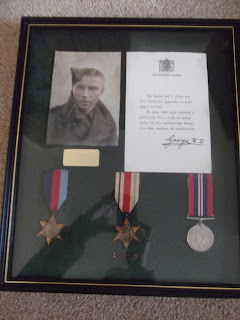


My mum has a document on the 'Estate of William Alexander Mason' who was Fred Balderson's half brother, and his son is also mentioned to have 'died in World War 11'.
Grimsby Chums
Another member of my family was in the First World War, and is mentioned in the book 'Grimsby Chums'.
Regimental Sergeant Major Jack Jolly M.S.M was my great great great granddad and the Chums last RSM, who was also given the Meritorious Service Medal.

I wrote some notes that I found interesting down:
At the beginning of the war, 304 'Pals Battalions' were formed, by volunteers with a common interest, workplace or hometown. However, the 5th Battalion of the Lincolnshire Regiment decided to choose a different word - chums. More colloquial Grimsby words can be found here. A lot of schoolboys volunteered, and the Grimsby Daily Telegraph noted "to allay the anxious feelings of Grimsby mothers we may say that all our boys are in perfect health and enjoying themselves immensely".

On August 9th, the Mayor of Grimsby received a telegram from Lord Kitchener asking for 100,000 men to join the army and to form a new Battalion of the Lincolnshire Regiment.
On January 16th 1916 they went to France, and travelled to the Bleuville rest camp. They then went to their camp Wallon Capell by train, where they heard of the first casualty. It was General Fitton, who crossed open land to check his brigade's future camp, and was shot by a sniper.
On February 15th, Kitchener himself inspected the Chums, however he was late, and it was raining hard, therefore the soldiers were not impressed.
In the book, a lot of extracts from the soldier's letters home are featured, here is one by John Coddington: 'I have had a terrible time in the trenches. It was hell. It was a proper baptism of fire I can tell you. But we came out of it alright.'
Another, by Pte Coddington wrote: 'Be happy 'til I cross the sea and step on England's shore again. There's no place like good old Grimsby'. I liked this extract because Grimsby gets spoken of badly, and its good to see a proud Grimbarian, and makes me proud that so many fought in the war including both my great great great granddads.
The second chapter is about the Battle of the Somme, and the Chums, 15th Royal Scots, 11th Suffolks and 16th Royal Scots faced La Boiselle, a village in Northen France which was occupied by the Germans. It was completely destroyed during the Battle of the Somme, along with a village next to it, Ollivers. There were two valleys which paved the way to La Boiselle, and the one of the left was named Mash Valley, and the one facing the chums was called Sausage Valley. Even though the Germans dug 40ft into the ground, when the British fired 1513 shells into the German positions 'destruction and mayhem was all that waited them that day'. I was surprised to read this, as the Battle of the Somme is noted as a catastrophe for Britain, but this shows we achieved some victory.
However, on July 1st 1916, the Germans emerged from their positions with machine guns, as the 50lbs cases of ammonal which had been planted by the British in the ground didn't affect the Germans as it was too far away from their positions. Someone said 'we had not gone far before down went one man, then another and then another..'
The books goes on to describe many of the men who died, their names, ages, occupations, parent's occupations, and to me that makes the figures more real. To see just a figure of the people who died means nothing to me, but to hear about their story and life makes it sink in that these were people with families and lives who died.
'..lay 20-year-old Harold Cammack whose parents ran the Bull Ring Coffee Hall and John Campling, an only son, and Sydney White, the son of a town councillor. They were all dead.'
'Eason, who had only just celebrated his 21st birthday, was hit almost immediately. Several saw him fall.'
'Pte Joe Winship of C Company, who, moments before, had been laughing and joking at the thought of the walk-over to come, saw friends either side of him fall dead and took refuge in a shell hole'.
When I was reading this book, I didn't understand a lot of the terminology used, or the geography mentioned, but what I found interesting was the stories of the soldiers, and how much detail was mentioned about them, and the journey they went on.
Coins
In War Horse, guineas were mentioned, and they were also mentioned in the War Horse documentary. I have a book of coins from this era, and this is what they look like, and it has information about each penny.


Rationing in WW1
I looked at rations during the First World War, and they were brought in during the last part of the war in 1918. However, in 1914 soldiers in the trenches were given the following rations (which I found here):
•1 1/4 lb fresh or frozen meat, or 1 lb preserved or salt meat
•1 1/4 lb bread, or 1 lb biscuit or flour
•4 oz. bacon
•3 oz. cheese
•5/8 oz. tea
•4 oz. jam
•3 oz. sugar
•1/2 oz salt
•1/36 oz. pepper
•1/20 oz. mustard
•8 oz. fresh or 2 oz. dried vegetables
•1/10 gill lime juice (if fresh vegetables not issued);
•1/2 gill rum (at discretion of commanding general)
•up to 2 oz. tobacco per week (at discretion of commanding general)
They were bought in during 1918 because the German submarines had started sinking the ships which were bringing food to Britain, as they were still importing food. As they were brought in the last leg of the war, I decided to look at the Second World War rations, as they went on for nine more years even after the war had ended.
Rations books were introduced because the Germans were sinking the merchant ships going to Britain which were stopping meat, fruit and sugar from going to there. This meant that a lot of the food was homegrown so that people could make the most their meals. Chickens were also kept in gardens for meat and eggs, as eggs were rationed and there was only egg powder to replace it. Pigs were also kept in gardens for their meat. The Ministry of Food had a campaign called Dig for Victory which encouraged people to produce their own food, and it was very successful.
As the men were at war, this meant the women were doing a lot of the work, and the Women's Land Army was introduced, were women replaced farmers and did agricultural work. Conscription was introduced, and by 1944 there were over 80,000 members. Even though that was near the end of the war, rations didn't end until 1954.
Women had to be inventive with making meals, and that is the part that I am interested in.
I looked at a book called Eating For Victory which shows recipes that could be made during the War.

Women in War Effort


Facts and Figures
It began July 28 1914, and lasted until November 11 1918.
There were over 37 million casualties in World War 1, with more than 16 million people dead. A third of the deaths were due to disease, like the Spanish Flu. - Wikipedia


These are from WW1 facts.
WW1 in Leeds
Project Inspire


Famous People from WW1
Famous People of WW1

Film
A Little Princess
Saving Private Ryan
All Quiet on the Western Front
War Horse
War Horse is a film set in 2011, about a young boy Albert, who raises a horse which gets sent out to war in Germany. He joins the war so that he can find the horse, and the films shows the journey in which the horse embarks on.
10 million horses died during World War 1. Before it was a film, it was a children's book written by Michael Morpugo in 1982, and it was then turned into a screenplay using a puppet horse.

This is from IMDb.
The opening scene shows the English countryside, before industrialization as it is set just before WW1. Stereotypical landscape.

Albert's first encounter with the horse, just as the mother has given birth to him.
In the village, horses are being sold, and the newborn horse is very agitated, playing up. He starts to be auctioned, and the Albert's dad pays 30 guineas for it. His friends mention how the horse isn't strong enough for ploughing the field, which is why it was bought.

His wife is livid that he spent so much money on the horse, because they need to pay rent. Albert offers to train the horse, and here he is feeding him. He says 'bet you're missing your mum. First time away from home', which relates to the young men who will go away to war.

Here is his mum doing housework while he trains the horse, which he names Joey. This is typical of what women were expected to do, as in that era they were expected to do household chores. This changed during the war when they had to do 'men's jobs' while the men were away.

As Joey needs to learn how to plough, this is Albert puts this ring round his neck so he can pull.
He tries to train him to be called at first and he is useless, but after perseverance, he eventually listens to Albert's owl calls.
The family's landlord comes to the house to say he needs to rent to be paid, or he will kick them out of the farm. We see how war is starting to affect people here as he says he needs the money as 'there's a war coming'.
The mother doesn't say anything to the landlord, just carries on cooking, showing women's roles in society.

The mother has stayed in the house so far, and most of the scenes have been her tending to the housework. Here she is knitting.

The village come to watch him train Albert, giving him support. He is useless, and it starts to rain so the people leave. However, the soft ground allows them to then start ploughing.

His parents find Albert asleep the next morning in the field with Joey, and the whole field has been ploughed.
We learn that Albert's father was in the Boer war, and earned the Distinguished Conduct medal and the South Africa Clean medal. Albert says 'I'd be proud' if he went to war.
The heavy rain throughout the night ruins the harvest, and the rent cannot be paid.

Someone drives through the village on a bike shouting to everyone 'We are at war. We are at war with Germany'.

People start enlisting to join the army.
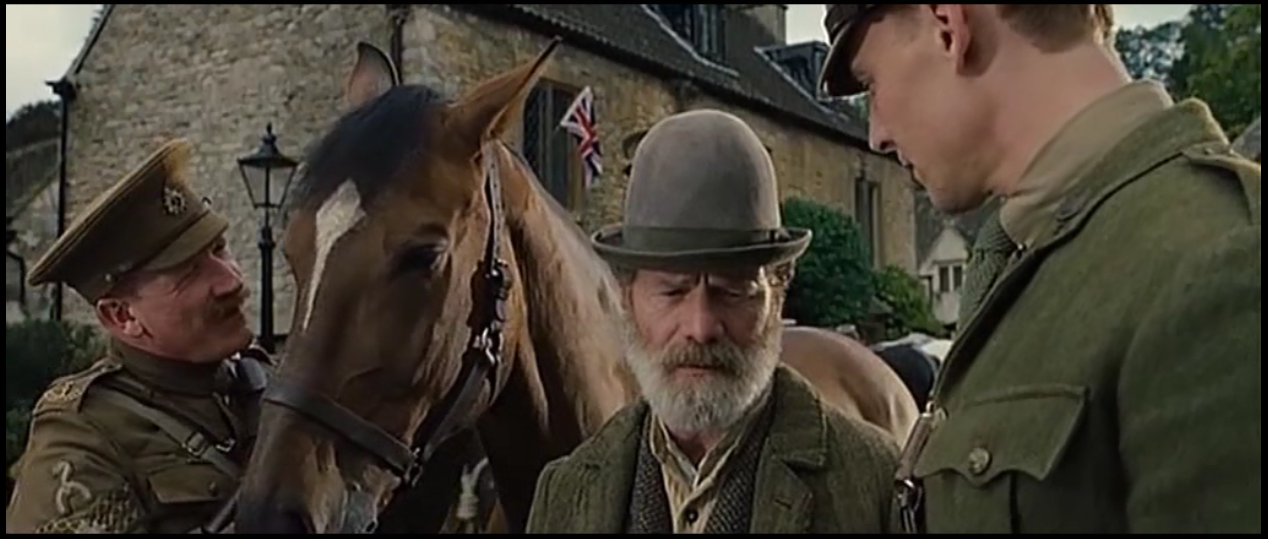
Albert goes home and can't find Joey. He finds his dad is selling him to a soldier as he can't afford to pay the rent now the harvest is ruined. Albert cries and promises the horse he will find him. He gets 30 guineas for the horse.

The soldiers have a practise charge with the horses.

He is the fastest horse, with Topthorn being second. The two horses become friends and are together most of the film.

The soldiers go to France and talk through the plan of action about how they are going to attack the Germans.
A couple of the soldiers are getting anxious about attacking. British have half the soldiers (300) the Germans have, but they have the element of surprise on their side.

This scene shows the Germans run as they see that the British are charging towards them.

This shows the horses charging through their campsite. The British only have swords.

The Germans run to their machine guns and start shooting at the British, killing a lot of soldiers and horses.

The solider who bought Joey is shot and killed. Joey keeps on running through the forest, and the Germans try and calm him but he plays up. He sees Topthorn again and they nuzzle.
Albert gets a parcel back home from the solider who rode Joey, with pictures he drew of him. It also included a letter saying how Jamie died in action.

Two German brothers were looking after Topthorn and Joey after they found them with their riders. The Germans are giving orders, and one of the brothers is told to stay with the horses, and the younger one is told to pack to fight with the rest of the soldiers that night. His older brother plans for him to stay.

When the soldiers are marching, the older brother rides Joey with Topthorn next to him, and grabs his brother from the line and pulls him onto the horse. They hide in a windmill.

However, in the morning they are found by the other soldiers, and shot dead. The horses are still in the windmill, and a German girl finds them and gives them water.

In the house she is cooking, and tells her Granddad about the horses she found. She shows the horses to her Granddad, and names them. She tries to train Joey to jump, but fails, just like Albert did. She has the same attitude as him.

Soldiers start to arrive at their house, and her Granddad tells Emilie to 'hide them quickly', so she does in her bedroom.

They scavenge their house for food, pots and anything else they could use. They take everything.
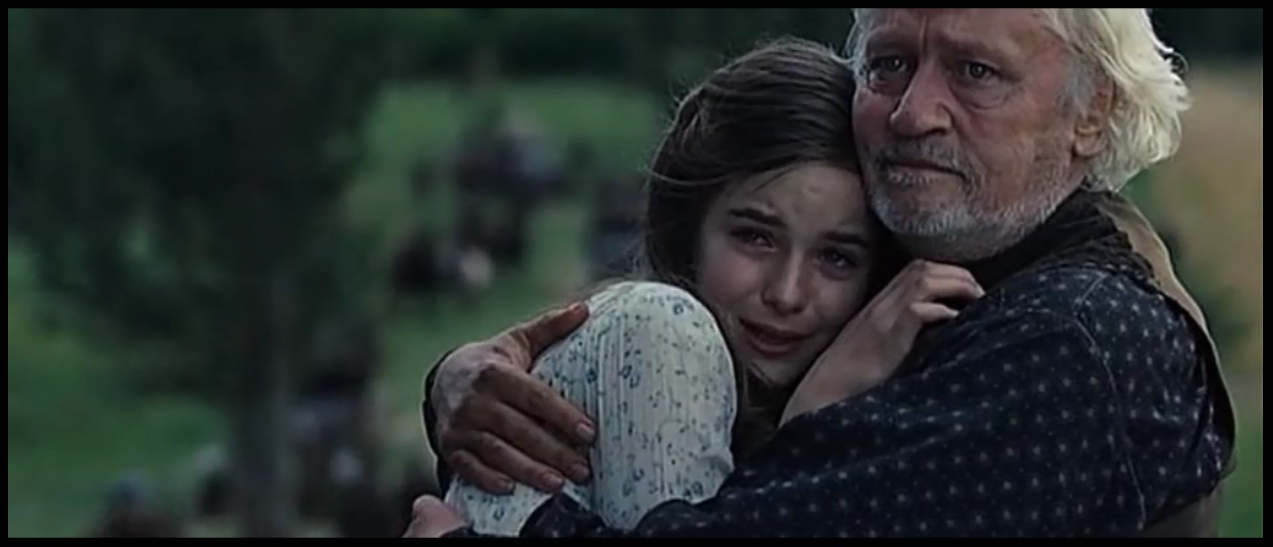
For her birthday she gets a saddle which was her mother's, and she rides Joey over the hill where they live. However, the soldiers are there, and take her off the horse so that they can use him. She cries with her Granddad as they leave.

Soldiers kill a horse, and replace it with Topthorn. However, Joey runs up, and they take him instead.
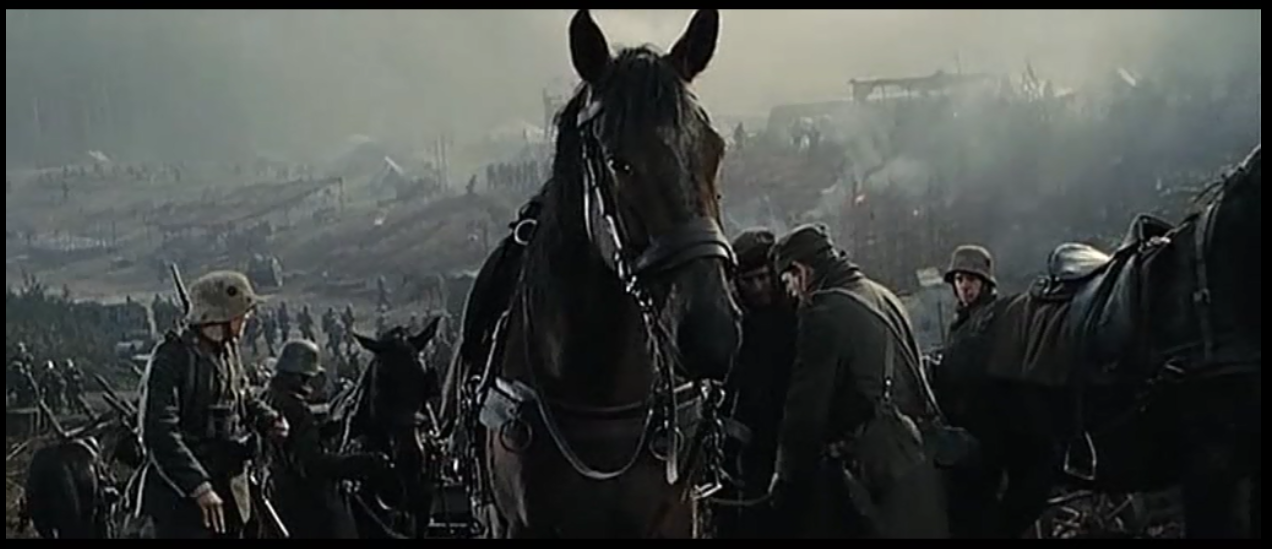
They saddle him up, ready to tow a tank. He gets a bad leg from pulling it.

They load and fire the cannon, and soldiers on the other side look scared as the lights flash.

Four years later, it is the Battle of Somme, and Albert has now joined the war because he is old enough to.

A soldier orders the other soldiers to shoot anyone who turns back from no mans land in the trenches. They all have to climb up and fight.

This shows the soldiers in no mans land fighting and dying. The Battle of Somme is noted for how many soldiers we lost in one day (60,000).

Albert makes it to the German trench, but can't see anyone alive. Then, poisonous gas is released, engulfing the British soldiers.

Topthorn injures his leg badly while fighting with the German troops.

The vet lets him rest, and he stays there to die. Joey nuzzles him, then runs.

He runs away from the soldiers, and into no mans land.

He gets trapped in barbed wire. In the morning the soldiers look through their binoculars into no mans land and spot the horse is there.

Colin, a British soldier, waves a white flag and crosses into no mans land, to save the horse. A German soldier does the same, and comes with pliers. Together, they help the horse and have friendly small talk. An animatronic horse was usen for this scene.
They then start to argue about who gets to keep the horse, so flip a coin. The British win, and Colin takes him to were all the injured soldiers are.

Albert is injured from the poisonous gas, and with his blindfold on he doesn't see Joey walk past him in the wounded section.
Colin asks the doctor to look at the horse.

The doctor says the horse is too badly injured, and the right thing to do is to put him down. A soldier is about to shoot him when Albert hears there is a miraculous horse and knows it will be Joey. He starts to do the owl noise in cupped hands which calls Joey.

Just before he is about to be shot, Joey's head lifts as he hears the call. Albert can then be seen walking towards Joey.

The solider who is about to shoot Joey disagrees with Albert that he knows him, and says he is just a random horse. When Albert starts to describe his appearance (four white socks, and a white diamond shape on his head), another soldier starts to wash the muck of him to reveal these characteristics.

This shows the soldiers being told that the war is over.
Joey cannot be kept in Albert's possession because all horses belong to the government and have to be auctioned of.
All of the soldiers chip in to buy back the horse for Albert, and raise 29 guineas.
In the village at auction the granddad of Emilie buys the horse for 100 guineas, as Emilie has died and he wants it for her memory, but when he hears Albert's story he gives the horse back to him.

Albert is then seen riding Joey into the sunset back home to his parents.
From this film, I want to look further at the value of guineas, horses in the war, other films based on true events, women's roles and war medals.
War Horse: The Real Story
I watched the documentary War Horse: The Real Story, on 40D. These are the notes I took from it, and some stills.
When the war started in 1914, Britain was still a country which relied on horse power.
In 1914 the British didn't have enough horses to take on the Germans.
They only had 26,000 horses, they needed an extra 100,000.
They set up a census, so that the army knew where
all the horses were in the country.

Len Whitehead
They interviewed someone who had his horses taken from him for the army and he said:
'One thing that affected me was when they took the horses. We only had four'.
'I was sad all day at school, and I cried myself to sleep that night'.
'Boxer, Duke and Violet were there names. I never saw them again of course'.
Warrior became a well known war horse, rode by 'Galloper Jack' (Jack Seeley). He volunteered after been in the Boer war.
After the Calvary charge on august 24, two British battalions were defending their position, and they lost 250 men, as the Germans had machine guns.
'Transportation became the most important role for the horse'
Germans would put shells on the routes they thought the British would go down with the horses. The most dangerous area was a route towards the Belgium town Eep, called Hellfire Corner.

'When a horse is tired or cold pull his ears and handrub his legs, it refreshes him and he will appreciate it'- from handbook
'My horse Alfie was always rolling around in the mud, all the mud he could find! I was always washing him down'. - Smiler Marhsall, who was in the WW1.
Battle of the somme. Supposedly the German defenses were destroyed, and it would be a walkover. Thousands of horses were waiting to charge with the Calvary men.
Warrior was there and rearing to go. He was a symbol of hope for the men
'Warrior is fine, we are fine'. - Brough Scott, Seeley's grandson
The artillery bombardment failed to destroy the German defences. Almost 20,000 men died
'The men and horses who survived the somme then had to endure cold winter of 1916, where temperatures plummeted.'
'20 Horse hospitals were built behind the front lines'
'One unseen danger that threatened all horses' Germans would scatter cowtrops everywhere, in mud, puddles, it would go through the sole of the foot, and right up to the joint between the two toe points, it would become infected, and there would be no way to clean it. As they say 'no foot, no horse'.

60,000 were taken back to Britain and auctioned of and around half a million were sold to the French to help with the countryside
Warrior survived the war, and returned to Isle of Wight with Jack Seeley. Warrior died in 1941 when he was 33.
Blue Cross

There wasn't much information on the Blue Cross website at first, but when I typed in Blue Cross ww1, a historic gallery was featured on the Blue Cross website, where I found this video.
'The army had far too many horses at the end of the war, and the very best horses were sold back in Britain.'
'The horses were fundamentally important' - they pulled and towed equipment.

The Blue Cross and this poster was mentioned in the documentary, and altogether during the first world war, nearly £6.5m was raised for them. The money went to horse hospitals, veterinary supplies and ambulances for the horses at war.
Poppy Appeal

'The Legion is the biggest armed force charity in the UK.'
'We spend £200,000 pounds each day, every day on welfare support'.
My granddad has some medals from WW1 and WW11 which have been passed down in our family, and I spoke to him about them.
Whose WW1 medals are these?
Your great great great granddad, Fred Balderson, he fought in the first World War.
Did he survive the First War?
Yes, he came home although we don't know the exact duration he was in the war for.
Whose are the medals from the Second World War?
Fred had three sons, Jack, Tom and Fred Balderson. Fred was in the Second World War, but was killed by a sniper in Africa. When you served in a campaign you got a star, and the medal he got was the Africa Star. His father, Fred, then committed suicide because of his death.

These are from the First World War, and include the Soldiers PTE number.

These medals are from the Second World War, and include a sympathy letter from the King, as the soldier died in action.


My mum has a document on the 'Estate of William Alexander Mason' who was Fred Balderson's half brother, and his son is also mentioned to have 'died in World War 11'.
Grimsby Chums
Another member of my family was in the First World War, and is mentioned in the book 'Grimsby Chums'.
Regimental Sergeant Major Jack Jolly M.S.M was my great great great granddad and the Chums last RSM, who was also given the Meritorious Service Medal.

I wrote some notes that I found interesting down:
At the beginning of the war, 304 'Pals Battalions' were formed, by volunteers with a common interest, workplace or hometown. However, the 5th Battalion of the Lincolnshire Regiment decided to choose a different word - chums. More colloquial Grimsby words can be found here. A lot of schoolboys volunteered, and the Grimsby Daily Telegraph noted "to allay the anxious feelings of Grimsby mothers we may say that all our boys are in perfect health and enjoying themselves immensely".

On August 9th, the Mayor of Grimsby received a telegram from Lord Kitchener asking for 100,000 men to join the army and to form a new Battalion of the Lincolnshire Regiment.
On January 16th 1916 they went to France, and travelled to the Bleuville rest camp. They then went to their camp Wallon Capell by train, where they heard of the first casualty. It was General Fitton, who crossed open land to check his brigade's future camp, and was shot by a sniper.
On February 15th, Kitchener himself inspected the Chums, however he was late, and it was raining hard, therefore the soldiers were not impressed.
In the book, a lot of extracts from the soldier's letters home are featured, here is one by John Coddington: 'I have had a terrible time in the trenches. It was hell. It was a proper baptism of fire I can tell you. But we came out of it alright.'
Another, by Pte Coddington wrote: 'Be happy 'til I cross the sea and step on England's shore again. There's no place like good old Grimsby'. I liked this extract because Grimsby gets spoken of badly, and its good to see a proud Grimbarian, and makes me proud that so many fought in the war including both my great great great granddads.
The second chapter is about the Battle of the Somme, and the Chums, 15th Royal Scots, 11th Suffolks and 16th Royal Scots faced La Boiselle, a village in Northen France which was occupied by the Germans. It was completely destroyed during the Battle of the Somme, along with a village next to it, Ollivers. There were two valleys which paved the way to La Boiselle, and the one of the left was named Mash Valley, and the one facing the chums was called Sausage Valley. Even though the Germans dug 40ft into the ground, when the British fired 1513 shells into the German positions 'destruction and mayhem was all that waited them that day'. I was surprised to read this, as the Battle of the Somme is noted as a catastrophe for Britain, but this shows we achieved some victory.
However, on July 1st 1916, the Germans emerged from their positions with machine guns, as the 50lbs cases of ammonal which had been planted by the British in the ground didn't affect the Germans as it was too far away from their positions. Someone said 'we had not gone far before down went one man, then another and then another..'
The books goes on to describe many of the men who died, their names, ages, occupations, parent's occupations, and to me that makes the figures more real. To see just a figure of the people who died means nothing to me, but to hear about their story and life makes it sink in that these were people with families and lives who died.
'..lay 20-year-old Harold Cammack whose parents ran the Bull Ring Coffee Hall and John Campling, an only son, and Sydney White, the son of a town councillor. They were all dead.'
'Eason, who had only just celebrated his 21st birthday, was hit almost immediately. Several saw him fall.'
'Pte Joe Winship of C Company, who, moments before, had been laughing and joking at the thought of the walk-over to come, saw friends either side of him fall dead and took refuge in a shell hole'.
When I was reading this book, I didn't understand a lot of the terminology used, or the geography mentioned, but what I found interesting was the stories of the soldiers, and how much detail was mentioned about them, and the journey they went on.
Coins
In War Horse, guineas were mentioned, and they were also mentioned in the War Horse documentary. I have a book of coins from this era, and this is what they look like, and it has information about each penny.


Rationing in WW1
I looked at rations during the First World War, and they were brought in during the last part of the war in 1918. However, in 1914 soldiers in the trenches were given the following rations (which I found here):
•1 1/4 lb fresh or frozen meat, or 1 lb preserved or salt meat
•1 1/4 lb bread, or 1 lb biscuit or flour
•4 oz. bacon
•3 oz. cheese
•5/8 oz. tea
•4 oz. jam
•3 oz. sugar
•1/2 oz salt
•1/36 oz. pepper
•1/20 oz. mustard
•8 oz. fresh or 2 oz. dried vegetables
•1/10 gill lime juice (if fresh vegetables not issued);
•1/2 gill rum (at discretion of commanding general)
•up to 2 oz. tobacco per week (at discretion of commanding general)
They were bought in during 1918 because the German submarines had started sinking the ships which were bringing food to Britain, as they were still importing food. As they were brought in the last leg of the war, I decided to look at the Second World War rations, as they went on for nine more years even after the war had ended.
Rations books were introduced because the Germans were sinking the merchant ships going to Britain which were stopping meat, fruit and sugar from going to there. This meant that a lot of the food was homegrown so that people could make the most their meals. Chickens were also kept in gardens for meat and eggs, as eggs were rationed and there was only egg powder to replace it. Pigs were also kept in gardens for their meat. The Ministry of Food had a campaign called Dig for Victory which encouraged people to produce their own food, and it was very successful.
As the men were at war, this meant the women were doing a lot of the work, and the Women's Land Army was introduced, were women replaced farmers and did agricultural work. Conscription was introduced, and by 1944 there were over 80,000 members. Even though that was near the end of the war, rations didn't end until 1954.
Women had to be inventive with making meals, and that is the part that I am interested in.
I looked at a book called Eating For Victory which shows recipes that could be made during the War.
Women in War Effort


Subscribe to:
Comments (Atom)
Copyright 2010. All rights reserved.
RSS Feed. This blog is proudly powered by Blogger and uses Modern Clix, a theme by Rodrigo Galindez. Modern Clix blogger template by Introblogger.