OUGD504 - Design for Print: Journey

As my concept is a Journey Through Print, I decided to research into what formats, information and language is used in travel branding.

I saw this on an East Coast train, and it is a reserved ticket. I think the language is very relaxed and informal, as it uses text language, a friendly slab serif and a conversational tone of voice. This is something I want to use in the language of my project because it is for people that don't know about print and feel it's quite a daunting area.


I then searched instagram for #trainstations as I was struggling to find advertisements through an image search and people take a lot of photos while waiting for trains. I found this which has a lot of poster advertisements showing how prominent they are in train stations. This is a format I want to use within my own project.


These adverts for East Coast are printed on billboards and in poster form, and again use the conversational tone of voice which makes them approachable. I really like these adverts because they are very clear and are quite light-hearted.


I couldn't find many advertisements on the internet so I decided to go to the train station and surrounding areas and take some photographs myself of the advertising there.

I took this picture from my front garden as it is on the billboard on the corner which is convenient. This is the advertisement I was thinking of when I came up with the idea for one of my posters 'From Paint to Press in 10 Minutes'. It's short and snappy and gets the point across in one sentence.


East Coast have a series of posters with short taglines on them and text language to create an informal conversational tone with viewers. The design of them is simple and bright to get the message across quickly and stand out to the viewer.


This is a poster for Transpennine express, and is a lot more busy than the East Coast posters. I don't think this is very professional and looks quite childish, so I wouldn't want to incorporate any ideas of this into my own work.


Another East Coast poster is similar to the others in that it uses a short heading at first to grab your attention, and then more information about it underneath. I think the images goes well with the heading and portrays a clear message.


I like this simple poster as the image and text directly relate to each other so the viewer can't interpret it any other way.


Although I don't like this poster as I find it quite boring and unappealing, I wanted to have a banner at the bottom of the poster where I would put the logo, so it is good to see that travel posters do this because then my designs will correlate to my concept well.


This is a train sign, which says there have been delays due to sheep on the line, which fits in with and shows relevance my poster idea of having sheep on train tracks.


OUGD504 - Design for Web: Igloo Hotel

I have decided to look at the existing website for the Igloo Hotel in Lapland, Hotel Kakslauttanen, as this is what I have decided to create my website for. I want to look at the content that is included now, and how to make the website more user friendly, engaging and professional.

Home Page


  • Different language options - these appeal to international customers, and widens audience
  • Logo is in typical place on website, but it isn't very appealing and doesn't give a representation of the unique, luxury hotels
  • There are three images at the top of the page, but they are very small, and the user can't get a good view of the hotel and surroundings. I think that they should be on a slider, and bigger so that people can see it more clearly and it can be a focal point of the site.
  • The background image is hidden through the large content area, so it seems very pointless. As it is a photograph, it cuts out a lot of what is trying to be shown rather than a pattern, so it is very pointless and doesn't add anything to the viewer.
  • The navigation bar is very small, and isn't something you immediately notice which could put users off as they can't see it straight away, and users are lazy and like everything in front of them
  • The use of the cartoon map makes the website seem quite cheap which reflects badly onto the hotels. It is childish, and reminds me of something you see in a primary school. I would get rid of the map, and if one was needed I would use a google maps embedded into the site to show where it is, and it would also be more interactive.
  • There is a lot of justified text, and I think there is too much of it to be easy to read without any headings etc
  • There are 6 images on the right, but they are untitled and so the user doesn't know what they are for. They also don't fill space very well, as there is a lot of white space underneath. This is a waste, and I think the layout needs to be changed so that all space is filled width wise, and this could shorten the height which would be better so users don't have to scroll as much.
  • Overall,  a very unappealing home page. I wouldn't want to book a holiday on here because it seems very untrustworthy.


Accommodation Page
  • There is a faded background image on this, which doesn't fit in with the page and looks out of place. It also makes the website look cheap, and doesn't make it look like a high end hotel.
  • The layout and order of the accommodation is very unappealing, default and looks as though the designer hasn't cared about the layout, but just put everything on the page. I think it would be better to have a accommodation page with options to click further onto certain rooms and read more details, availability etc
  • It doesn't allow you to look for available prices, or book the hotel which is what the user would go onto the site to do, so I think it defeats the point of the website, as users can't act upon what they see until they get to the contact page.
  • When you click on the ground plan link, it is a very amateur and dated plan that you get, and I think that could be improved.
  • I think the virtual tour is a great idea, and much better at showing the user what the room looks like than just images, but unfortunately they aren't very high quality which reflects on the quality of the hotel.


Resort Page
  • Again, like the accommodation page the layout doesn't work well and is an uninspiring list. It doesn't use space wisely, and you have to click on small arrows which aren't very clear to find out more about the resort sections.
  • I think they could use images in a better way, which showcase the resort and accommodation a lot more, as they don't really stand out right now.


Resort Sub Pages
  • The pages are very predictable as they use the standard layout which has been used for all pages, and although this has a sense of continuity, it doesn't necessarily fit the information and images.


FAQS
  • There is some really interesting information on the FAQS page, but it isn't laid out in a engaging, attractive way. Default colours for links are used, headings don't stand out and the use of image is chaotic.


Contact


  • There is just a simple enquiry form on this page. This is how you enquire about bookings, but I don't think this is very clear to the user as there is no link or option for this on the accommodation page, therefore users won't realise that it is here.

There are other pages, such as Weddings and Services, but I won't delve into those because they follow the same layout and problems as the other pages.

OUGD504 - Design for Web: Types of Research

Qualitative Research
Qualitative research is a type of research conducted to establish the audience's beliefs, feelings, motivations and triggers. Results are often rich in insights.

I'm going to do this by looking at the reviews of the Igloo Hotel, and other hotels in Lapland to see who the audience is and why they liked or disliked the hotel, and then I can incorporate these into my design content.


Quantitive Research
Quantitive research is a type of research that provides valid data. It's all about the numbers. Insights can be difficult at times, as quantitive research requires analysis to identify trends.

For this I can note the similarities of the hotel websites I find, such as the links they include in the navigation bar, the type of images used and how the booking system works. This will be useful information to me because I can then analyse what is important in a hotel website, and what I should include on my own.


Primary Research

Primary research is new, not old, information. 

My primary research will include me creating designs and asking people to test them and see if they find them easy to use, and if they could find all the information that they are looking for.


Secondary Research
Secondary research is research performed on old data. E.g. new analysis on data gathered last year.

To do secondary research I need to look at existing websites, ones in Finland, and for hotels, to see how functional they are. I want to look at how easy it is to find holidays, and to alter them if certain search results don't appear. I also want to see how they make their hotel more appealing than others, and how they reach out to specific audiences. I also want to see if Finnish websites have a particular style to them which I can keep to respect the culture, and will still appeal to international customers.


Segmentation
You hear a lot about 'market segmentation'. It means the market of the product, or service, is segmented into groups. Those groups, or segments, represent a part of the customer group or audience. They are usually grouped by demographics such as sex, age, ethnicity, income, occupation etc.

To find out the audience for the hotel, I can create a survey asking people who are different ages and occupations if they would visit the hotel and what activities they would do while they're there.


Focus Group
Focus groups are moderated group discussions whose participants are selected accurately represent the audience or customer.

For this I can create a survey asking people their age, occupation, marital status and whether or not they would go to the Hotel Kakslauettnan. Once I've gotten the demographic results I can then design my website targeting the right audience.


Visual Research

Visual research is the gathering of visual information, stuff that a designer will find useful in solving a problem. Visual research is generally the domain of the designer, or the project team, rarely the client.

For this I will find examples of different hotel websites and take screenshots to document this on my blog. This will be useful to me because I can see what other websites include, and can inform my own content.

I will also find images I can use for my website, which will include the hotel, interior and resort itself. I also want to look at images from Lapland as this could help inform the style of my website to keep it cultural.
I will also be looking at websites in general and seeing how they function, and what I like, as I need to know what can be done technically so I know my limitations and advancements when designing.

OUGD501 - 'Ways of Seeing' Critical Analysis

Task:
Using the text Berger, J. (1972) 'Ways of Seeing', write one critical analysis of an advert which, in your opinion, reflects the logic of consumerism, or the social conditions of consumerism, discussed in the lecture 'Consumerism' (17/10/13). Use at least five quotes, referenced according to the Harvard system, in support of your argument.


Dolce and Gabbana
Sexual desire is a common theme in fashion advertisements, and it is no exception in this Dolce and Gabbana Spring 2013 collection as Berger says in The Way of Seeing, 'publicity increasingly uses sexuality to sell any product or service' (Berger, 1972, p144). 
The female model in the advertisement looks on to the camera while men surround her and try to look at her as though she is something to be worshipped, which can be supported by when Berger says 'you are observed with interest, but you do not observe with interest' (Berger, 1972, p133). It suggests that if you buy Dolce and Gabbana you will be transformed into someone who is envied and doted on by others, and you can look on because you are now seen as glamorous. This also shows the influence the woman holds over these men for being able to afford this product, and how 'those who have the power become lovable' (Berger, 1972, p143). This should satiate our desires for wanting to be seen as an elite class who other people want to aspire to and love, and should therefore persuade the viewer to buy this product so that they too can have this envious role in society. 
The fact that the woman is the focal point of the image while dressed in elaborate clothing and accessories, and the men are shirtless in plain trousers could suggest Berger's idea that 'those who lack the power to spend money become literally faceless' (Berger, 1972, p143). This can be supported by the fact none of the men are looking at the camera and are dressed in the same attire, therefore not attracting any attention and blending into the background. Their faces aren't something you remember from the advertisement, or even notice, as the viewer takes in the woman's appearance.
Although the three men can be seen as 'faceless', they are what society perceive as attractive - tall, dark and handsome. Featuring these trying to get the girls attention help support the idea that 'with this you will become desirable' (Berger, 1972, p144). The publicity is trying to reach out to the viewer that in order to become an object of desire, you need to buy this product, and that without it this vision isn't possible for you.
Another vision which isn't possible is the idyllic, beach setting that the publicity is set in. Although the viewer knows they can't go to this beach, as publicity 'cannot offer the real object of pleasure and there is no convincing substitute' (Berger, 1972, p132), it gives the viewer a look into the life of the people who wear these clothes. So if you were to buy the product it would make you feel that part of your identity is more like those in the publicity and you have an illusion that you are a glamorous and powerful person, when in actual fact you 'will be poorer by having spent (y)our money' (Berger, 1972, p131). 


Bibliography
Berger, J. (1972). Ways of Seeing. Great Britain: Penguin Books.

OUGD501 - Identity Lecture

Lecture Summary

  • To introduce history conceptions of identity
  • To introduce Foucault's discourse methodology
  • To place and critique contemporary practice within these frameworks, and to consider their validity
  • To consider postmodern theories of identity as fluid and constructed (in particular Zygmunt Bauman)
  • To consider identity today, especially in the digital domain
Theories of Identity
  • Essentialism (traditional approach) - genetic thing that can't be changed
  • Our biological make up makes us who we are
Phrenology


If you're animal area is bigger than you should be, you will be considered as socially unacceptable and will probably have criminal tendencies. 

Cesare Lombroso (1835-1909) - Founder of positive criminology - the notion that criminal tendencies are inherited

Historical Phases of Identity
Douglas Kellner - Media Culture: Cultural Studies, Identity and Politics between the Modern and the Postmodern, 1992

  • Pre Modern Identity - personal identity is stable - defined by long standing roles
  • Modern Identity - modern societies being to offer a wide range of social roles
Pre Modern Identity
Institutions determined identity
Marriage, church etc

Farm workers (landed gentry), soldiers (the state), factory worker (industrial capitalism), housewife (patriarchy), gentleman (patriarchy) and husband-wife (marriage/church) are secure identities

Modern Identity
Charles Baudelaire - The Painter of Modern Life (1863)
Thorstein Veblem - Theory of the Leisure Class (1899)

Baudelair introduces concept of the flaneur - a gentleman-stroller. They're out and about, being seen and it is important to be that. Walking around in his best gear

Conspicious consumption of valuable goods is a means of reputatbility to the gentleman of leisure. It's about showing off wealth in terms of fashion, technology etc

Gustave Caillebotte - Paris Street, Rainy Day 1877

The trickle down theory is that the upper classes wear a certain type of clothes which represent their class, the lower class aspire to be those people and try to imitate them. They start getting cheap knock-offs, so on the face of it they resemble the upper classes. The upper classes then try to move away from this, and change their style. This is pretty much how the fashion system works these days.

This is a quote about the anxiety we feel about identity:
'The feeling of isolation is rarely as decisive and intense when one actually finds oneself physically alone, as when one is a stranger without relations, among many physically close persons, at a party, on a train, or in the traffic of a large city' - Georg Simmel

Post Modern Identity
Michael Foucault
'Discourse analysis'
Identity is constructed out of the discourses culturally available to us

What is a discourse?
'... a set of recurring statements that define a particular cultural object (e.g. madness, criminality and sexuality) and provide concepts and terms through which such an object an be studied and discussed.' - Caballaro 2001

Possible Discourses
  • Age 
  • Class
  • Gender
  • Nationality
  • Race/ethnicity
  • Sexual orientation
  • Education
  • Income
  • Etc
Discourses to be considered
  • Class
  • Nationality
  • Race/Ethnicity
  • Gender and sexuality
Race and Ethnicity
Chris Ofili - No Woman, No Cry 1998
He is a significant painter for black culture. He looks at perception of black people and their place in society. He props his paintings on elephant dung, a symbol of Africa.

Gillian Wearing, playing on stereotypes that black men are well hung
Signs that say what you want them to say and not sigs that say what someone else wnats you to say, 1992


Gender/Sexuality
Cindy Sherman, Untitled Film Stills, 1977-80
Masquerade and the mask of femininity 

OUGD504 - Design for Print: Boarding Pass Research

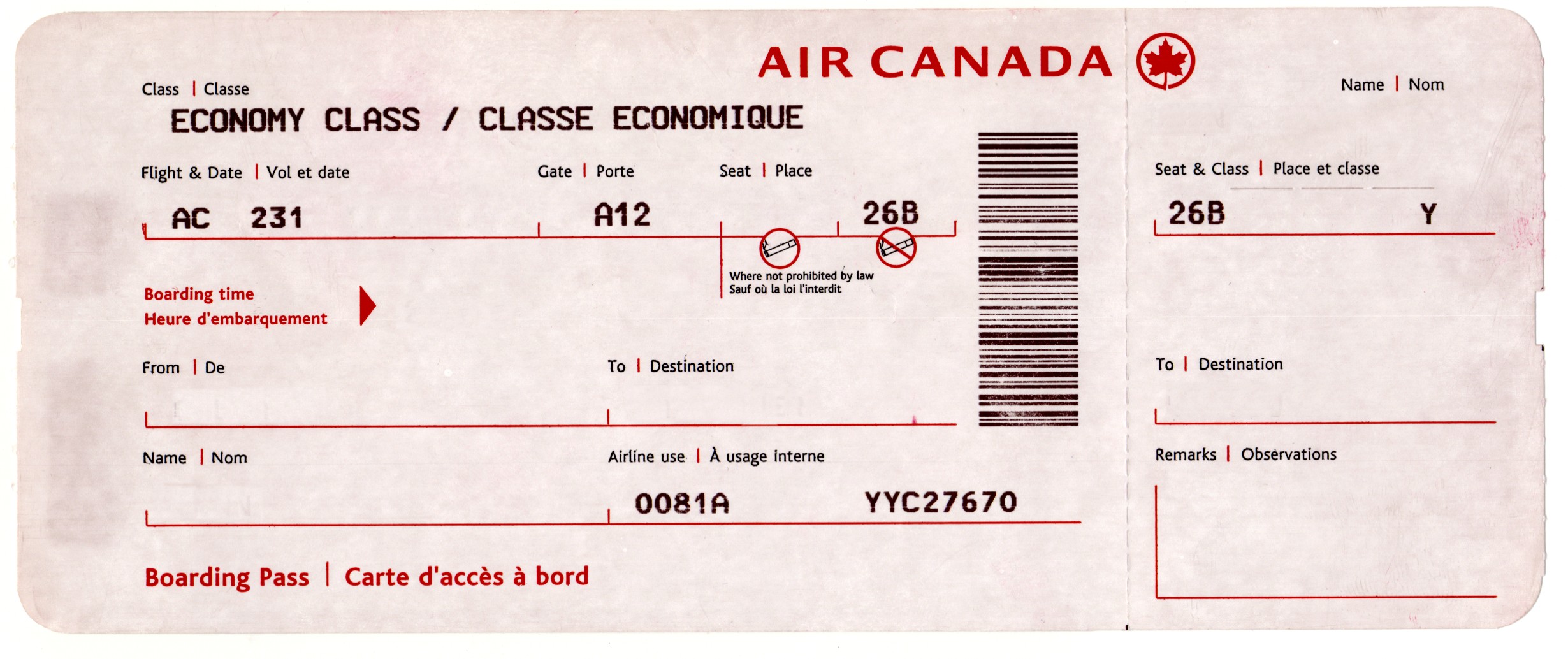
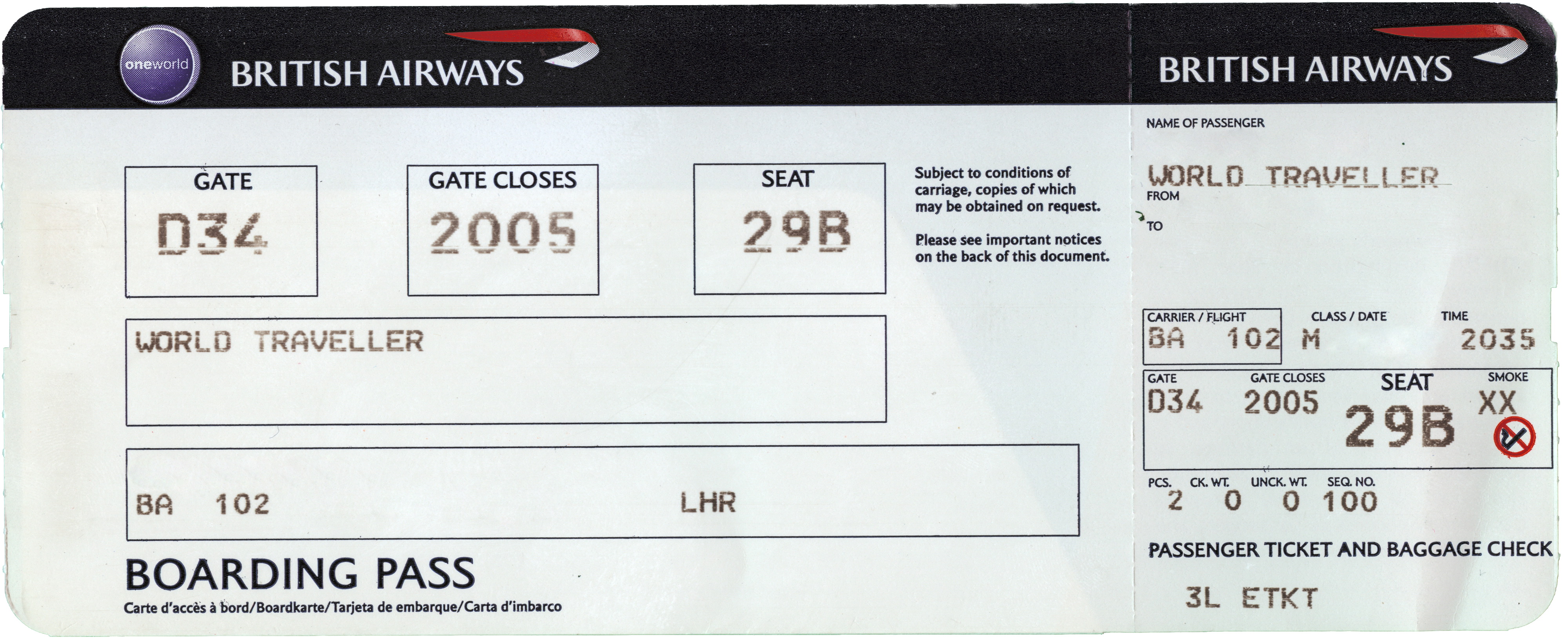
As I had already looked at regular tickets, I decided to look at boarding passes as these are what you have when you go on a plane journey. These are bigger than train and bus tickets, so this format can fit more information on in a bigger, more readable font. 

The numbers are a lot bigger compared to the letters on this boarding pass, which makes them more significant and will probably work better in processes such as embossing if I take this on board.


This one leaves a lot of blank to be filled in, and this could be a good idea to print a template of and hand draw the processes in to give a more hand produced look and feel.


This is a very simple layout and is very legible, which is something my tickets need to be because they are appealing to people who don't know a lot about the subject.


This boarding pass had little pictograms to make it more understandable, and this is something I wanted to incorporate with my tickets for things such as cost, and using £ signs to portray how expensive a process is. I think the layout is quite clean as well by using faint line to separate the information. 


I really like the layout of this boarding pass, as it's clean, simple and has a bold use of colour and type.


I like how this boarding pass is very clean and minimalistic, so it's easy to read. It also shows the design works in a small space and a bigger one, with it being condensed on the tear off ticket on the right.


This is in the style of a boarding pass for a couples wedding. Again, it is very clean and uses a minimal layout to portray the information.


OUGD501 - Consumerism Seminar

In this weeks seminar we recapped on last weeks lecture on consumerism and then did a group task.

The group task was with Sarah, Jasper and Dan. We had to look at an extract from Ways of Seeing by Berger, J. which are his views on consumerism. Our extract we looked at discussed how the purpose of publicity is there to make us marginally dissatisfied with what we have right now, and how our lives can be improved by what we buy. It also addresses how having money is seen as a way to overcome our anxieties and how sexual desires sell. 
We then had to find some examples of advertising that supported the ideas in the text. I thought of the Maybelline advert for 'Baby Lips'. 


It's a common theme in advertising that youth equals beauty, and people buy beauty products which are told will make them appear more youthful, as it makes you more desirable. A baby is obviously a symbol of youth, so is it too far to suggest that you want lips as soft as a baby's - as this can be interpreted that the product is sexualising innocence. There is a quote in the extract which says 'If you are able to buy this product you will be lovable. If you cannot buy it, you will be less lovable', and it can be applied to this advertising campaign because if other girls buy the product and have soft lips what men want, then other women will want to buy it because they don't want to feel left out and have people think they don't have soft lips.

If you don't see an advertisement you have no need for it, and have gone through life not needing a particular product, but as soon as you see an advertisement telling you it will satisfy your desires, you then 'need' the product.
 

Copyright 2010. All rights reserved.

RSS Feed. This blog is proudly powered by Blogger and uses Modern Clix, a theme by Rodrigo Galindez. Modern Clix blogger template by Introblogger.